How to Keep Cut Steel Parts From Rusting
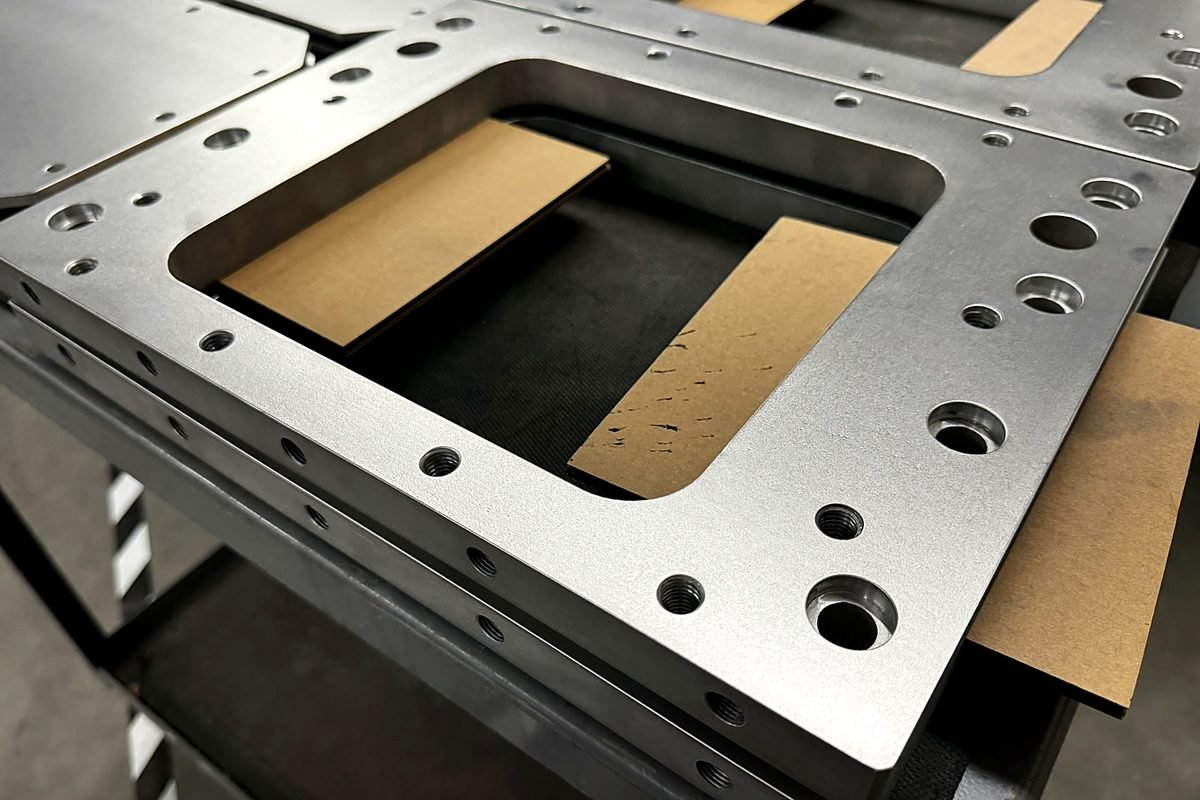
Cut a carbon steel part, leave it on a bench in a humid shop, and you can watch it bloom orange within a day. Rust is not a maintenance problem you deal with later. It is a design decision you make at quote time. This guide lays out why bare steel corrodes so fast and the four practical ways to stop it, from switching material to putting a real coating on the order.
If you have not committed to carbon steel yet, the cleanest fix is often to choose differently up front. Start with how to choose the right metal for your part, then use the options below to protect the steel you do cut.
Why bare steel rusts so quickly
Carbon steel has no built in corrosion resistance. Iron plus oxygen plus moisture equals rust, and that reaction starts as soon as a fresh surface meets humid air. A cut part exposes clean, bare metal on every edge, so there is nothing standing between the steel and the atmosphere.
Waterjet cut parts add a wrinkle. They come off the machine wet from the cutting stream, so they will flash rust if they are not dried promptly. A good shop dries and handles them, but the clock starts the moment the part is cut, and any part that sits damp will show it.
Option 1: pick a material that does not rust
When the environment is harsh, the cheapest long term fix is often to skip carbon steel entirely and cut the part from stainless or aluminum instead. Neither one rusts, so there is no coating to chip and nothing to maintain in the field. It costs more up front and it buys back the coating step and the warranty calls.
- Stainless for corrosion resistance with strength. Which grade depends on how aggressive the exposure is, covered in 304 vs 316 stainless.
- Aluminum when weight matters and the loads are moderate. The grade choice is in 5052 vs 6061 aluminum.
Option 2: galvanized steel
G90 galvanized carries a zinc coating that protects the surface, and ACP stocks it from 18 GA to 11 GA. It is a good middle ground for many parts, giving you steel strength and cost with a built in barrier against corrosion.
One thing to know: cutting exposes bare steel at the cut edge, so those edges can still rust over time even though the faces are protected. Galvanized works well for parts that stay mostly dry, but it is not the pick for constant wet exposure where the cut edges are under attack. Note too that galvanized reads a few thousandths heavier than plain steel at the same gauge, which the sheet metal gauge chart spells out.
Option 3: coat the finished part
Powder coating, zinc plating, and anodizing for aluminum seal the surface for good. These run through ACP finishing and coating partners and are timed after cutting, forming, and any hardware installation, so the sequence matters. Coating is the standard answer for painted enclosures and any steel that lives outdoors.
- Powder coating for a durable, colored, painted finish on enclosures and visible parts.
- Zinc plating for a thinner protective layer on hardware and structural steel.
- Anodizing for aluminum, which both protects and can add color.
Because a coating adds a step through an outside partner, it changes the lead time. The finishing and outside processing guidelines cover what each option needs and how it fits the schedule.
Option 4: short term protection
For parts that will be machined, welded, or assembled soon, you do not always need a permanent finish. A light oil film, dry storage, and low humidity keep flash rust off in the meantime. Treat this as a stopgap between operations, not as a finish that goes to the field. It buys days and weeks, not months, and it is the wrong plan for a part that has to survive outdoors.
Match the option to the exposure
The four options are not ranked best to worst. They fit different jobs, and the right pick follows the environment the part lives in:
- Constant wet or salt: go straight to stainless or aluminum. Coatings and galvanized both have a weak point at the cut edge.
- Outdoor but dry most of the time: a powder coat or plating on carbon steel is durable and cost effective.
- Mostly indoors, occasional damp: galvanized carries its own protection and skips a finishing step.
- Consumed soon in the next operation: short term oil and dry storage are enough.
When two options look close, price both. The cost of a coating step against the cost of a different material is often the deciding factor, and it is easy to compare in the portal.
Put the finish on the order
Whatever you choose, specify it at quote time. Coating and plating change the lead time and have to be listed on the order to actually happen. On an automated quote, a note or an attached PDF by itself does not add a finishing operation, so the finish has to be selected and shown on the line, not just described. A finish left only in a note is the most common way a part ships bare when it was supposed to be coated.
Quick checklist
- Harsh or wet service: consider stainless or aluminum instead of steel
- Mostly dry, want low cost: galvanized, knowing the cut edges are bare
- Outdoor or painted steel: plan a powder coat or plating from the start
- Machined or assembled soon: light oil and dry storage as a stopgap
- Never let cut steel sit wet, especially waterjet parts
- Select the finish on the line, do not just write it in a note
- Remember coating adds an outside step and changes lead time