5052 vs 6061 Aluminum: Which to Use for Sheet Metal
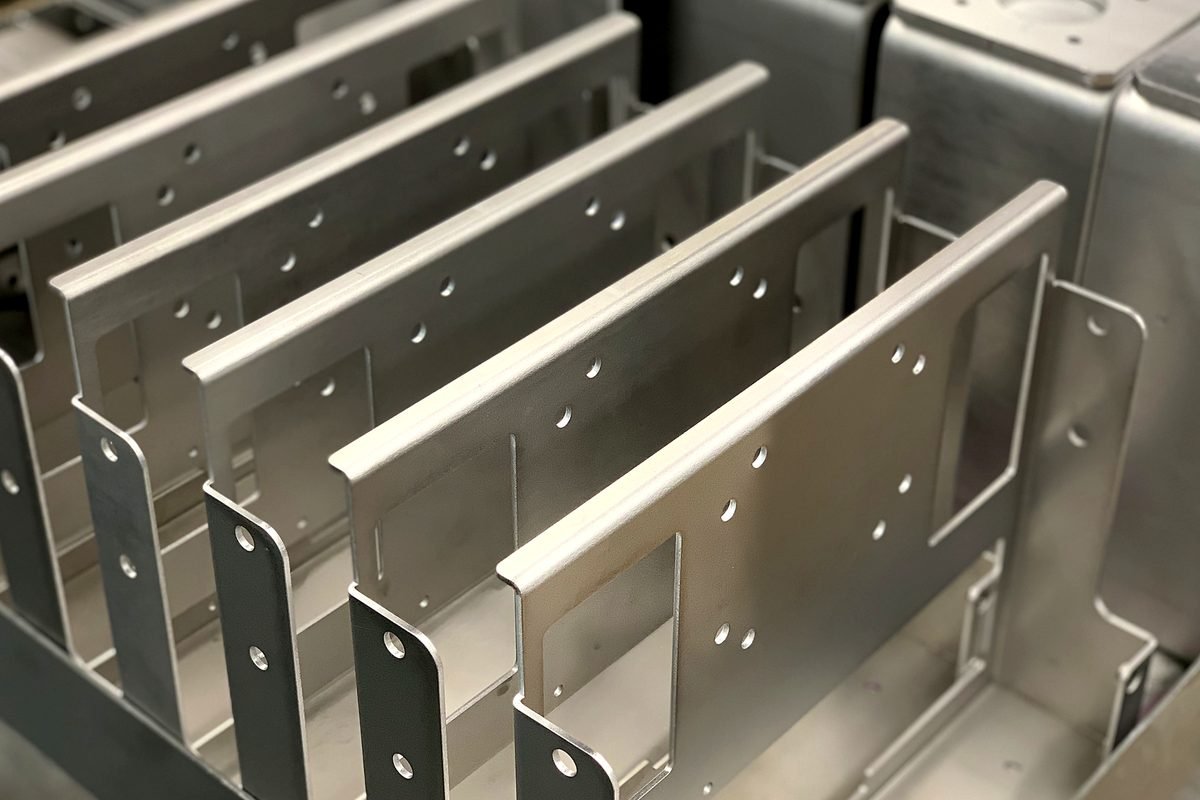
Two aluminums cover the large majority of sheet metal work, and they are good at almost opposite things. 5052 bends. 6061 carries load. Pick by what the part actually has to do, not by habit, and most aluminum decisions answer themselves. This guide walks through both grades, how to bend 6061 without cracking it, and where each one wins.
Both grades are drawn from what ACP keeps in stock, so either one prices instantly in the quote portal. If you are still weighing aluminum against steel or stainless, start with how to choose the right metal for your part, then come back here to settle the grade.
One family, two very different tempers
The number tells you the alloy family and the letter suffix tells you the temper, or how the metal was worked and treated. Those two things set nearly everything you care about on a sheet metal part:
- 5052-H32 is strain hardened and not heat treatable, which keeps it soft enough to form hard.
- 6061-T6 is heat treated to a high strength temper, which makes it strong and stiff but less willing to take a tight bend.
- Neither one rusts, so both are honest choices for outdoor and wet service.
Because the difference is real and predictable, you rarely have to guess. Decide whether the part is mostly a formed shape or mostly a load path, and the grade follows.
5052-H32 is the one that bends
5052-H32 has excellent formability. It bends tight without cracking, so it holds up to sharp flanges, hems, and boxy enclosures that would split a stiffer alloy. It also offers very good corrosion resistance, including marine and salt exposure. Because it is not heat treatable, its strength is only moderate, which is the trade you accept for how well it forms.
Reach for 5052 on anything that gets shaped: enclosures, chassis, wraps, covers, brackets with tight bends, and panels. ACP stocks 5052-H32 from 0.040″ to 1/4″, which spans most formed sheet metal work.
6061-T6 is the one that carries load
6061-T6 is stronger and stiffer than 5052. It machines cleanly, tapping and countersinking hold their edges, and it anodizes to a clean, uniform finish. That combination makes it the structural aluminum: mounting plates, machined brackets, gussets, frames, and any flat part that has to bear a load without flexing.
The trade off lives in the T6 temper. It is less forgiving in a tight bend and can crack if it is folded sharp, especially across the grain, so it wants a generous inside radius. ACP stocks 6061-T6 from 0.032″ to 1″, so it also covers thick plate that 5052 does not reach.
Bending 6061 without cracking it
You can absolutely bend 6061, you just have to respect the temper. A few habits keep the flanges intact:
- Open the radius. Use a larger inside radius than you would on 5052 or mild steel. A sharp bend is where 6061 splits.
- Mind the grain. Bending across the grain direction cracks more easily than bending along it. Where the layout allows, orient the bend to favor the grain.
- Keep flanges reasonable. Very short flanges next to a tight radius concentrate stress, so give the fold room.
- Let the shop set the radius. The finished inside radius comes from the closest available tooling for your material and thickness, so flag any radius that is functionally critical before you order.
For the underlying rules on radii and flange sizing, see the complete guide to designing sheet metal parts before you commit a tricky fold.
Corrosion and finish
Both grades resist corrosion well and neither one rusts, so for most outdoor and wet parts either is a sound choice. The difference is at the margins:
- 5052 has the edge in marine and salt environments, which is why it shows up on boats and coastal enclosures.
- 6061 takes a cleaner anodize. If the part is anodized and appearance matters, the more uniform finish can tip a flat part toward 6061.
Anodizing runs through vetted partners and is timed after cutting and forming, so it has to be selected on the order, not just noted. The finishing and coating page covers how that step fits into the schedule. If your real corrosion problem is a steel part, the fix may be a different metal entirely, which is the subject of how to keep cut steel parts from rusting.
How each one cuts
Both grades cut cleanly on the fiber laser and the waterjet, so the grade rarely changes the cutting process. Thickness does. Thin and mid aluminum runs fast on the laser, while thick 6061 plate is natural waterjet work, cut cold with no heat affected zone. Whichever way it is cut, remember that aluminum is called out in decimal inches rather than gauge, so put the exact thickness on the drawing. The sheet metal gauge chart lists the standard aluminum decimals.
What it costs, roughly
The two grades sit close together on price, well under stainless and above plain carbon steel. Thickness and quantity move the number far more than the choice between 5052 and 6061, so pick the grade the part needs and let the geometry drive the cost. The fastest way to see it is to price the same part in both grades in the quote portal.
Quick chooser
- Bends a lot, needs to form clean: 5052-H32
- Bolts up and bears load, or gets machined: 6061-T6
- Anodized part where the finish shows: 6061-T6
- Marine or salt exposure, formed part: 5052-H32
- Thick plate above 1/4″: 6061-T6
- A part with heavy forming and some load: split it, 5052 for the folds
- Either grade cuts clean on the laser and the waterjet