Sheet Metal Gauge Chart (Inches and Millimeters)
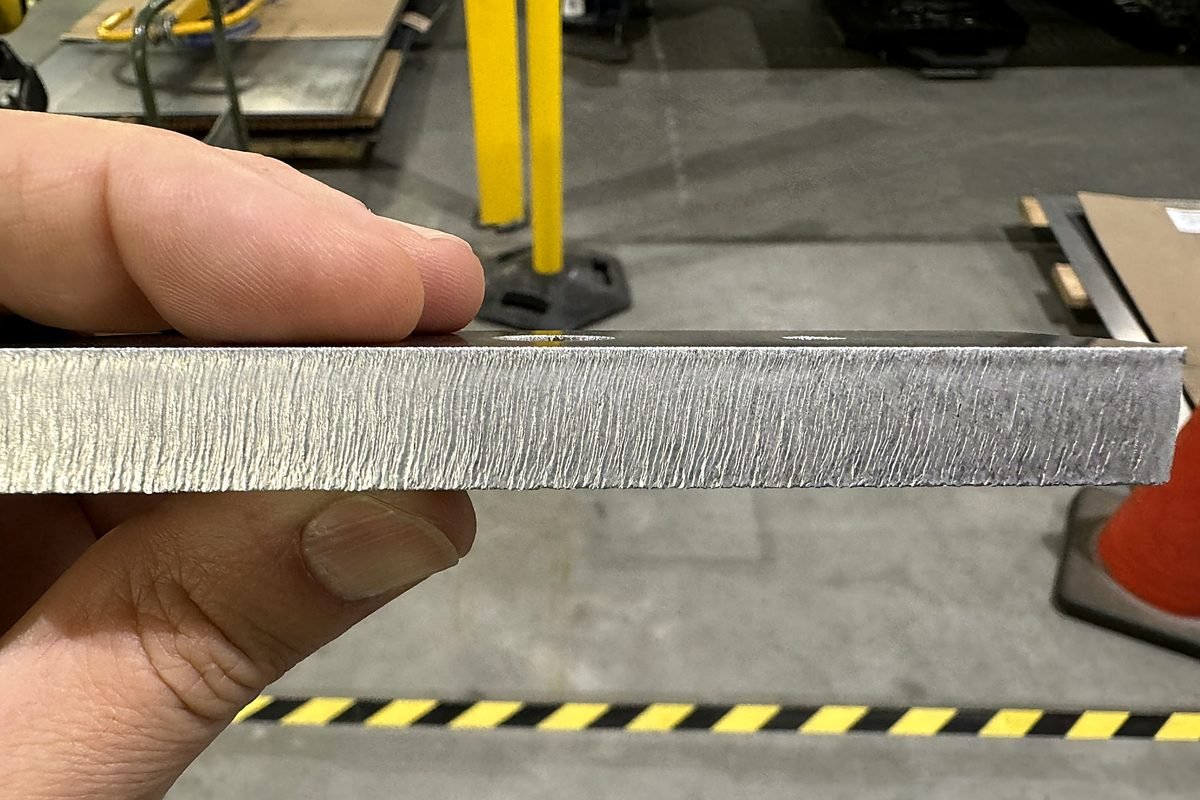
Gauge is an old numbering system where a bigger number means thinner metal, and the exact thickness changes with the material. That is enough to cause real mistakes on a drawing. Here is a working chart across steel, galvanized, and stainless, in inches and millimeters, plus the one habit that removes the confusion for good.
Every value here is drawn from what ACP actually stocks, so a thickness you pick off this chart prices instantly. For the full shelf across all materials, see the Stocked Materials list, and if you are still choosing a metal at all, start with how to choose the right metal for your part.
How gauge works, and why it confuses people
Three quirks of the gauge system trip people up:
- Lower gauge means thicker metal. 11 gauge is heavier than 24 gauge, which is backwards from how most numbers work.
- The scale is not linear. The jump from one gauge to the next is not a fixed amount, so you cannot do the math in your head.
- The thickness depends on the material. 16 gauge steel, galvanized, and stainless are three different thicknesses. Aluminum does not really use gauge at all.
That last point is the one that bites. A number that seems to name a thickness actually names a slightly different thickness for each material, which is exactly why a drawing should call out the decimal, not the gauge alone.
Gauge came out of the old wire and sheet trades and stuck around long after the industry moved to precise decimals, so it survives mostly as shorthand between people who already agree on the material. The moment a drawing crosses to a shop, or a job switches material, that shared assumption breaks. A quote reads the decimal, not the intent behind a gauge number, so naming the decimal is how you get the thickness you actually pictured.
Gauge to thickness
| Gauge | Carbon steel (in) | Carbon steel (mm) | Galvanized (in) | Stainless (in) |
|---|---|---|---|---|
| 24 GA | 0.024″ | 0.61 mm | 0.028″ | 0.024″ |
| 20 GA | 0.036″ | 0.91 mm | 0.040″ | 0.036″ |
| 18 GA | 0.048″ | 1.22 mm | 0.052″ | 0.048″ |
| 16 GA | 0.060″ | 1.52 mm | 0.064″ | 0.060″ |
| 14 GA | 0.075″ | 1.90 mm | 0.079″ | 0.075″ |
| 12 GA | 0.105″ | 2.67 mm | 0.108″ | 0.105″ |
| 11 GA | 0.125″ | 3.17 mm | 0.123″ | n/a |
| 7 GA | 0.180″ | 4.55 mm | n/a | n/a |
Decimal thicknesses shown are ACP shelf values. Millimeters are the carbon steel inch value × 25.4. n/a means that gauge is not part of the standard shelf program for that material.
Galvanized reads heavier
At the same gauge number, galvanized is a few thousandths thicker than plain carbon steel because of the zinc coating on the surface. 16 gauge steel is 0.060″, while 16 gauge galvanized is 0.064″. The chart uses ACP stocked galvanized thicknesses, so the numbers match what actually ships. That zinc is what protects the surface, though the cut edges end up bare, a detail covered in how to keep cut steel parts from rusting.
Converting to millimeters
The chart lists millimeters for the carbon steel column, but the conversion is the same for any material and any thickness: millimeter equals inch × 25.4. So 0.060″ is 1.52 mm, 0.125″ is 3.17 mm, and 1/4″ is 6.35 mm. If you work in metric, run your target thickness through that one multiplier and then match it back to the nearest stocked decimal inch, because the shelf is organized in inches. Do not round hard in the process, since a few thousandths can be the difference between a fit that works and one that binds.
Aluminum does not really use gauge
Aluminum sheet is normally called out in decimal inches, not gauge: 0.032″, 0.040″, 0.063″, 0.080″, 0.090″, 0.125″, and up. Use the decimal and skip gauge for aluminum entirely, since an aluminum gauge number rarely matches the steel value of the same name. ACP stocks 6061 from 0.032″ to 1″ and 5052 from 0.040″ to 1/4″. For which grade to pick, see 5052 vs 6061 aluminum.
Above 7 gauge it is plate
Once material gets thicker than the sheet range, the shop stops using gauge and calls it out in fractions or decimals: 3/16″, 1/4″, 3/8″, 1/2″, 3/4″, and 1″. ACP stocks carbon steel through 1″. Thick plate like this is natural waterjet work, which cuts it cold with clean edges. The trade offs between processes at thickness are covered in cutting thick metal, waterjet vs laser.
The habit that prevents mistakes
There is one rule that erases every gauge ambiguity: put the decimal thickness on the drawing and in the model, and match it to a thickness the shop actually stocks. Do that and there is no question about whether 16 gauge meant steel, galvanized, or stainless.
Thickness is nominal
One more thing the chart cannot show: stock thickness is nominal and follows mill tolerance, so the real sheet can run a few thousandths above or below the listed number. Design so that small variation does not break a fit. Where thickness feeds a press fit or a mating stack, leave room for it, and pair that thinking with the other small dimension that affects fit, covered in kerf explained. For the tolerances the cutting process itself holds, see the cutting tolerances guidelines.
Quick checklist
- Lower gauge number means thicker metal
- The same gauge is a different thickness in steel, galvanized, and stainless
- Galvanized reads a few thousandths heavier from the zinc coating
- Aluminum is called out in decimals, not gauge
- Above 7 gauge, use fractions or decimals for plate
- Put the decimal thickness on the drawing and match a stocked value
- Remember thickness is nominal and follows mill tolerance